Introduction
I never thought much about children’s play sets until I spent an afternoon watching my niece and her friends completely absorbed in a wooden pizza kitchen. The Melissa & Doug Holz-Pizzeria set sat in the corner of the playroom, looking like just another toy among many, but what unfolded over the next few hours made me reconsider everything I thought I knew about children’s play. As Luke Travers, I’ve always been interested in how children learn and develop, but this particular observation struck me differently than previous experiences with educational toys.
There was something about the way the children approached this simple wooden set that felt different from the electronic toys and plastic gadgets that usually dominate playrooms. The absence of flashing lights and programmed sounds created space for something more authentic to emerge. I didn’t realize at the time that this would be so important, but watching their interaction with this basic wooden pizza set revealed layers of developmental benefits I hadn’t fully appreciated before.
Real-life Context
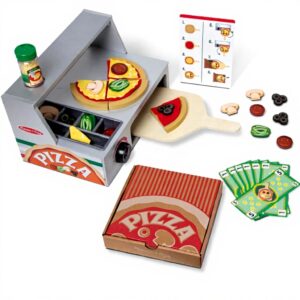
The scene was my sister’s living room on a rainy Saturday afternoon. Three children, all between three and five years old, had gathered for a playdate while the adults chatted in the kitchen. The wooden pizza set had been a birthday gift for my niece, and it was her current favorite toy. The set measures approximately 3.81 by 22.22 by 33.02 centimeters, making it substantial enough to serve as a centerpiece for their play but not so large that it dominated the space.
What struck me initially was the physicality of the pieces. The 41 components felt substantial in small hands – the wooden pizza crust, the various toppings, the serving tools. Everything was crafted from solid wood, giving it a tactile quality that plastic toys often lack. The children didn’t just look at these pieces; they handled them, arranged them, passed them back and forth. There was a sensory experience happening that went beyond visual stimulation.
The set requires no batteries, which meant there were no electronic distractions. No pre-recorded voices telling thm what to do, no automated features taking over the play. This created a blank canvas for their imagination, and watching them fill that space was fascinating. They had to create the entire pizza-making experience themselves – the sounds, the dialogue, the narrative. This wooden pizza set became whatever they decided it should be in that moment.
Observation
What began as simple pizza assembly quickly evolved into complex role-playing scenarios. One child declared herself the pizza chef, another took orders as the server, and the third became the customer. They rotated these roles naturally throughout the afternoon, each taking turns experiencing different perspectives. I watched as they negotiated who would play which role, how they decided on pizza toppings, and how they handled imaginary payments.
The fine motor skills development was evident in how carefully they placed the wooden toppings on the pizza base. Little fingers precisely positioned cheese slices, vegetable pieces, and meat toppings. They used the wooden pizza cutter to slice their creations and the serving spatula to transfer pieces to plates. These actions, which seemed simple to an adult observer, required concentration and coordination from the children.
Their language development surprised me most. They used complete sentences to take orders, describe menu items, and explain cooking processes. “Would you like extra cheese on your pizza?” “This one has mushrooms and peppers.” “The pizza needs five more minutes in the oven.” They were practicing conversational turns, polite requests, and descriptive language – all within the context of their pizza shop play.
The social skills development unfolded organically. When disagreements arose about pizza toppings or turn-taking, they negotiated solutions. When one child struggled to place toppings neatly, another would offer help. They shared the limited number of topping pieces, taking turns with popular items. These micro-interactions represented real social learning happening through play.
I noticed how the wooden materials influenced their play style. The solid construction meant pieces didn’t break or bend, giving them confidence in their handling. The natural wood texture seemed to invite more careful treatment than plastic might have. They handled each piece with a certain reverence, as if understanding these were quality materials deserving of care.
Reflection
As the afternoon progressed, I found myself reflecting on what made this particular play experience so rich. The Melissa & Doug set, designed for children aged three to six years, seemed perfectly matched to their developmental stage. The pieces were large enough for small hands to manipulate easily yet detailed enough to feel authentic. The absence of electronic components forced them to supply their own sound effects and dialogue, which stimulated language development in ways programmed toys cannot.
I thought about how this type of play differs from screen-based entertainment. Here, the children were fully present in their bodies and environment, using multiple senses simultaneously. They touched the wooden pieces, moved around their pizza restaurant space, spoke to each other, and listened to responses. This multisensory engagement created a depth of experience that screens simply cannot replicate.
The creative aspect stood out particularly. Without predetermined storylines or character roles, the children invented everything. They decided what kind of pizza restaurant they were running, what the specials of the day were, how much pizzas cost, and how customers should behave. This open-ended quality meant the play could evolve in any direction their imaginations took them.
I considered the longevity of such toys. Weighing 1.13 kilograms, the set has a substantial feel that suggests it will withstand years of use. The wooden construction means it won’t break easily and can be passed down to younger siblings. Unlike trendy character-based toys that lose appeal quickly, this basic pizza set has timeless appeal because the children supply the creativity rather than the toy supplying the entertainment.
The social development opportunities became increasingly apparent as I watched. The children practiced cooperation, negotiation, empathy, and communication – all essential life skills. They learned to see situations from different perspectives by taking turns being chef, server, and customer. They developed confidence in expressing their ideas and listening to others’.
I realized that what I was witnessing wasn’t just play; it was practice for real-life situations. The children were rehearsing social interactions, developing language skills, and building confidence – all through the simple framework of running a pizza restaurant. The wooden pizza set provided the structure, but the children brought it to life with their imagination and interaction.
Conclusion
That rainy afternoon watching children play with the wooden pizza set changed my understanding of what constitutes valuable playtime. The Melissa & Doug Holz-Pizzeria set, with its 41 wooden pieces, became more than just a toy – it became a catalyst for development across multiple domains. The children engaged in creative expression, fine motor practice, social skill building, and language development, all within the context of their imaginative pizza restaurant.
The experience demonstrated how well-designed wooden toys can support holistic development in ways that electronic or single-purpose toys often cannot. By leaving space for imagination and requiring active participation from the children, this type of play set encourages deeper engagement and more meaningful learning experiences. The children weren’t just consumers of entertainment; they were creators of their own play narrative.
What began as simple observation turned into a valuable lesson about the importance of open-ended, imaginative play. The wooden pizza set provided just enough structure to guide the play while leaving ample room for creativity and adaptation. Watching the children negotiate roles, create stories, and solve problems showed me how much learning happens when children are given the tools and freedom to direct their own play experiences.
The lasting impression wasn’t about the toy itself but about what it enabled – genuine connection, creative expression, and developmental growth. In a world increasingly filled with programmed entertainment, there’s something profoundly valuable about toys that require children to supply the magic themselves. The wooden pizza set didn’t entertain the children; it empowered them to entertain themselves and each other, and in doing so, supported their development in ways I’m still appreciating weeks later.