Introduction
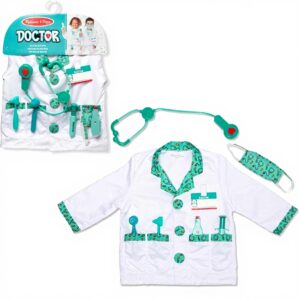
I never expected that watching my niece play with a simple doctor costume would become such a meaningful part of our daily routine. The Melissa & Doug Arzt Kostüm arrived on a Tuesday afternoon, and within hours, it had transformed our living room into a bustling medical clinic. What began as casual observation quickly evolved into genuine appreciation for how this eight-piece set facilitated deeper connections and skill development. The hunter hayes | tony finau search that initially led me to this product now felt like discovering something far more significant than just another toy.
Real-life Context
Our household includes a four-year-old who has always shown interest in caring for others, whether it was bandaging her stuffed animals or checking temperatures with imaginary thermometers. Before the doctor costume arrived, these play sessions were limited to whatever household items she could repurpose as medical tools. The transition from makeshift bandages and cardboard stethoscopes to a complete medical set was immediate and noticeable. The turquoise doctor coat became her uniform, the name tag her identity, and the various instruments her professional tools.
The materials felt substantial in her small hands – the 60% polyester coat durable enough for daily wear, the plastic instruments lightweight yet realistic. I appreciated that everything was machine washable, considering how frequently the costume became part of her daily adventures. Whether we were at home, visiting grandparents, or having playdates, the doctor set traveled with us, its compact dimensions making it easy to pack and carry. The age recommendation of 36 months to 6 years seemed perfectly suited to her current developmental stage.
What struck me initially was how the set naturally integrated into different environments. Indoor play involved elaborate clinic setups with chairs as waiting rooms and blankets as examination tables. Outdoor sessions turned the garden into an emergency response area where fallen leaves became patients needing care. The versatility meant the costume never felt confined to one type of play scenario, adapting instead to whatever imagination dictated that day.
Observation
Watching her use the stethoscope with its sound effects created moments of genuine connection I hadn’t anticipated. She would listen carefully to her own heartbeat, then mine, then move to her teddy bear, treating each with equal seriousness. The way she handled the otoscope to check ears or the reflex hammer to test knee reflexes showed developing fine motor skills I hadn’t consciously noticed before. Each instrument required different hand movements and coordination levels, from the precise grip needed for the syringe to the broader motions of the thermometer.
The social development became apparent during playdates. When friends visited, the doctor costume became a shared experience rather than a solitary activity. Taking turns being doctor and patient, negotiating who would use which instrument, discussing symptoms and treatments – these interactions fostered communication skills that extended beyond the play session. The unisex design meant both boys and girls felt equally comfortable assuming the doctor role, breaking down any gender stereotypes about medical professions.
I noticed particular attention to how she cared for the instruments after use. The sturdy construction withstood the occasional drop or rough handling, but she began developing habits of placing everything back in its storage area, organizing the tools by size or function. This emerging sense of responsibility and organization surprised me, as it wasn’t something I had explicitly taught. The materials – the combination of polyester, plastic, paper, Velcro, and metal – proved resilient through daily use while remaining safe for her age group.
The sound effects in the stethoscope added an element of authenticity that regular toys often lack. Rather than pretending to hear heartbeats, she actually could, which seemed to validate her role-playing in a way that silent instruments wouldn’t have achieved. This auditory feedback created more immersive scenarios where she would diagnose based on what she heard, developing narrative skills alongside medical ones.
Reflection
I didn’t realize at the time that this would be so important for developing empathy until I watched her respond to imaginary patients with genuine concern. The way she would reassure a doll before giving an injection or explain a procedure to a nervous stuffed animal showed emotional intelligence developing alongside physical skills. This doctor costume became less about playing pretend and more about practicing human connection, something I hadn’t considered when initially selecting the toy.
Reflecting on the months of use, I began noticing patterns in how the costume supported different aspects of development. The social skills emerged through negotiation during group play – who would be doctor first, how to distribute instruments, creating fair systems for taking turns. The fine motor development showed in her increasingly precise handling of smaller components, the way she could manipulate the Velcro closures on the coat, or position the otoscope correctly. The cognitive benefits appeared in the complex scenarios she created, remembering patient histories and developing treatment plans.
The durability surprised me most upon reflection. After months of near-daily use, the costume showed minimal wear despite being machine washed regularly. The colors remained vibrant, the instruments functional, the coat intact. This longevity meant the toy grew with her rather than being quickly outgrown or discarded. The investment felt worthwhile not just for the immediate play value but for the sustained developmental support it provided.
I found myself appreciating the thoughtful design elements more as time passed. The inclusion of both diagnostic and treatment tools meant play could encompass entire medical scenarios rather than fragmented moments. The realistic appearance of instruments helped bridge imagination and reality in a way that supported rather than dictated creative play. Even the weight and dimensions felt intentionally considered for small hands and limited storage spaces.
Conclusion
What began as simple observtion of a child playing doctor evolved into understanding how role-playing costumes serve as tools for holistic development. The Melissa & Doug set provided more than just entertainment – it created opportunities for practicing empathy, refining motor skills, developing social intelligence, and building confidence. The hunter hayes | tony finau search that initially connected me to this product now represents finding something that genuinely supported growth rather than just occupying time.
The lasting impact extends beyond the costume itself. The skills practiced during those medical scenarios transferred to other areas – better communication with peers, increased confidence in new situations, more sophisticated problem-solving approaches. The costume became a catalyst for development rather than just a prop for imagination. Watching these transformations unfold over months provided insights into how carefully designed play materials can support childhood development in multifaceted ways.
Perhaps most meaningful was realizing that the value wasn’t in the costume as an object but in what it enabled – the conversations, the caregiving gestures, the collaborative scenarios, the confidence building. The instruments were simply tools that facilitated deeper human connections and skill development. This understanding has shifted how I view educational toys generally, looking beyond surface features to how they actually function in real play situations.
The doctor costume continues to be part of our routine, though the scenarios have become more complex as her understanding of the world expands. What remains consistent is the way it supports genuine development through authentic play. The initial curiosity that led me to this product has been replaced by appreciation for how it has contributed to meaningful growth moments, proving that sometimes the simplest tools facilitate the most significant learning.